
Liability in Tennessee Multi-Car Pileups
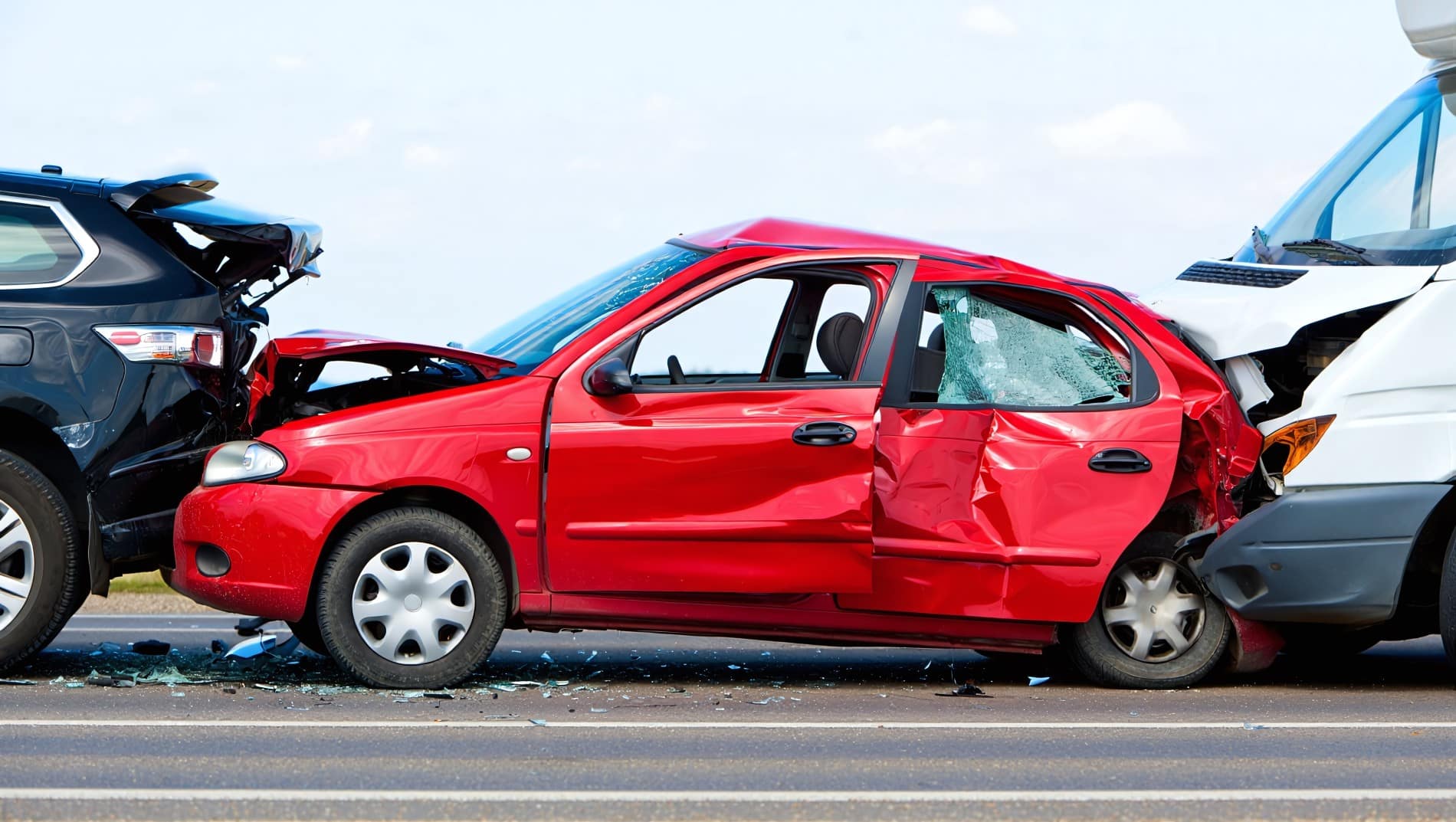 Crashes involving two vehicles can be catastrophic enough, but when we’re talking about a crash involving three or more vehicles, the outcomes are even worse. Chain-reaction crashes occur when two cars collide, and other vehicles are unable to stop in time to avoid the accident scene. Each additional car that ends up involved in the crash causes further damage and makes it even more likely that additional cars will get tangled up in the mess.
If you’ve been involved in a multi-car pileup in Tennessee, you’re likely wondering what your legal options are and how to get the compensation you are owed. Contact Delius, McKenzie & McCarter to set up a consultation now.
How multi-car pileups happen
Multi-car pileups occur in a variety of ways, and often begin with one careless driver’s lapse in judgment. A driver speeds, looks away from the road for a second, or follows a little too closely. An accident occurs. Other vehicles behind them are unable to stop in time, perhaps because they are following too closely, struggling to control their vehicles on Tennessee’s winding rural roads, or encountering inclement weather. As vehicles attempt to brake or swerve, the accident can quickly escalate, with each impact increasing the severity of the crash.
While driver error is at the heart of these collisions, factors such as bad weather and limited visibility can significantly increase both the likelihood of a pileup and the extent of resulting damage.
Fault and liability in Tennessee
Tennessee is a modified comparative fault state. This determines how compensation is (or isn’t) paid when fault is split between multiple parties. In comparative fault states, victims can receive compensation even if they are partially to blame for the accident. In a modified comparative fault state like Tennessee, victims can recover compensation if they are less than 50% at fault.
Imagine this scenario. Driver A causes a collision by driving while distracted. They hit the vehicle in front of them, Driver B. The driver behind them, Driver C, attempts to swerve around the crash scene but is unable to do so, and they hit Driver A, sandwiching Driver A between themselves and Driver B. Driver C may be partially at fault for the accident if they were speeding, as they may have avoided the collision (or at least made it less severe) if they hadn’t been speeding. However, because Driver A would likely remain primarily liable, both B and C could file claims and receive compensation.
Who may be liable
In multi-car accidents, there’s typically more than one liable party. The person who causes the initial crash often has the greatest share of liability, but other drivers may be partially at fault if they were speeding, didn’t take proper evasive action, or otherwise made the collision worse.
In some cases, a city or county may be liable under the Tennessee Governmental Tort Liability Act for injuries caused by a dangerous condition on a road it owns and controls, especially if it had actual or constructive notice, subject to limits.
Unique challenges in multi-car pileups
Victims of these collisions may face challenges that victims of two-car crashes don’t. To start, there is far more evidence to process and analyze, and in some cases, evidence contradicts itself, making it difficult to prove your case.
Additionally, these crashes involve multiple insurance companies. Every single driver’s insurance company will be fighting to limit its own financial losses, no matter how much of a role the driver played in the accident. You may find yourself at the center of a fight where everyone is pointing fingers at the other insurance companies, but no one is willing to accept liability and pay out everyone else’s claims.
Adding to the insurance confusion, everyone is likely to have varying levels of insurance coverage. While some drivers might have maxed out their policy limits, you may also have some involved drivers who have the minimum amount required under Tennessee law. When you have multiple victims fighting for a limited pool of funds, it’s possible that everyone will get less than they deserve. In these cases, you may be able to use your own uninsured or underinsured motorist coverage, if applicable, to pursue additional compensation.
Recovery and damages in claims involving shared fault
It’s not impossible to get what you are owed after a multi-car pileup. A car accident attorney can help, especially one who is skilled in these types of claims, knows how to analyze and use evidence, and is willing to fight for you against multiple insurance companies.
Each victim will make a claim against the at-fault party’s insurance. If multiple people are determined to be at fault, their compensation may be reduced proportionately to their share of liability. For example, if a driver has significant losses of $50,000 but is found to be 20% at fault, their jury award would be reduced to $40,000.
In addition to evidence that proves who is at fault for the accident, you also need evidence showing your losses. A successful car accident claim may result in compensation for:
- Medical expenses, including future medical expenses for victims of catastrophic injuries
- Lost wages, including lost future earning opportunities, if your injury will permanently limit your ability to work
- Pain and suffering
- Property damage
It is crucial to consult an attorney as soon as possible after a crash. Other victims will be exploring their legal options, and the at-fault driver’s insurance company will likely go into damage control mode. This gives you an opportunity to protect your rights and pursue the compensation you are entitled to.
Discuss your case with Delius, McKenzie & McCarter now
If you’ve suffered injuries in a multi-car pileup, you may be entitled to compensation. Contact us today to speak with a member of our team.
Attorney Bryce W. McKenzie received his JD from University of Tennessee College of Law, and has been a clerk for the Court of Criminal Appeals. He is admitted in Tennessee, Federal Court, and the US Court of Appeals. Read more about Bryce W. McKenzie.